

A physician supervised weight loss Cypress TX, gives people a medical option when diet and exercise alone have not worked. It goes beyond a basic meal plan.
Physician-led care looks at the biological, medical, and behavioral factors that can affect weight. These may include appetite, metabolic health, stress, sleep, hormone disorders, medications, and past weight-loss efforts.
Obesity is not just about willpower. Many genetic, metabolic, emotional, and environmental factors affect it. That is why one plan does not work for everyone.
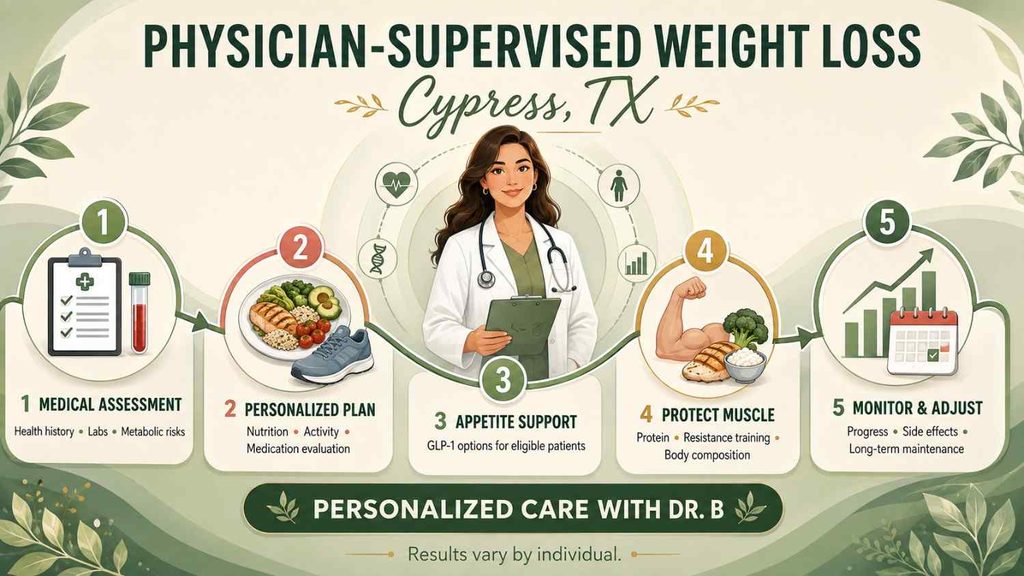
A personalized program may combine nutrition changes, physical activity, behavioral support, prescription medication, and body-composition tracking.
At Reinvi MD, Dr. Sakina Broachwala evaluates each patient before recommending care. She looks for reasons why weight loss has been difficult, checks for health risks, and builds a plan around the patient’s medical needs.
Eligible patients may receive an evaluation of semaglutide, tirzepatide, Wegovy, Zepbound, or another suitable treatment.
A good medical weight-loss plan should reduce excess fat while protecting skeletal muscles. It should also support better health, not just produce a smaller number on the scale.
This guide covers the consultation process, medical history, laboratory testing, body composition, medication eligibility, nutrition, muscle preservation, body-contouring treatments, monitoring, costs, and Reinvi MD’s Cypress location.
Physician Supervised Weight Loss Cypress TX – Medical Consultation and Patient Assessment
The first step in physician supervised weight loss Cypress TX, is a detailed consultation. During this visit, the physician decides whether medical treatment fits the patient’s needs. They also look for issues that could affect safety, side effects, or results.
A complete assessment may cover:
- Current weight, waist measurement, and weight history
- Previous diets, exercise plans, and medications
- Past patterns of weight loss and regain
- Daily meals, snacks, cravings, and eating habits
- Physical activity and any movement limitations
- Sleep quality and daily stress
- Personal goals and expected results
- Obesity-related medical conditions
- Treatment options that may be suitable
Physician Supervised Weight Loss Consultation Process
A consultation is not simply a visit to ask for a GLP-1 prescription. Semaglutide and tirzepatide are prescription medications. They have eligibility rules, contraindications, side effects, and follow-up requirements. The physician needs to see the full picture first.
The visit may start with a simple question: When did the weight gain begin? The physician may also ask whether it happened around pregnancy, menopause, an illness, less physical activity, emotional stress, or a medication change.
Other symptoms matter, too. Constant hunger, strong food cravings, binge-eating symptoms, fatigue, poor sleep, or menstrual changes may offer useful clues. Sometimes several issues happen at once, and that’s common.
The consultation should lead to a plan that fits the patient’s health, risks, preferences, and daily life. It should also set fair expectations from the start. Weight-loss results differ from person to person. No medication can promise one fixed result for everybody.
Medical History Review Before Physician Supervised Weight Loss
A person’s medical history can affect weight gain and treatment safety. Before prescribing medication, the physician may review:
- High blood pressure or cardiovascular disease
- Prediabetes, insulin resistance, or type 2 diabetes
- Thyroid disease and other endocrine conditions
- Liver, kidney, gallbladder, or digestive disorders
- A personal history of pancreatitis
- Pregnancy, breastfeeding, or plans for pregnancy
- Mental-health conditions or disordered eating
- Allergies and previous reactions to medication
- Current prescriptions and dietary supplements
- Relevant personal and family medical history
Some medications can increase appetite, affect energy use, or contribute to weight gain. Examples may include certain corticosteroids, insulin treatments, psychiatric medicines, and seizure drugs.
That does not mean a patient should suddenly stop taking them. Doing that may be unsafe. The physician can review the medication, consider how it affects weight, and discuss other options with the patient when appropriate.
Laboratory Testing When Clinically Appropriate
Not every patient needs the same laboratory tests. The physician chooses them after reviewing symptoms, medical history, medications, and risk factors.
Possible tests include:
- Fasting glucose or hemoglobin A1c
- Lipid profile
- Liver and kidney function tests
- Thyroid-stimulating hormone
- Complete blood count
- Comprehensive metabolic panel
- Extra endocrine tests when symptoms justify them
Laboratory results may reveal diabetes risk, high cholesterol, organ dysfunction, or an endocrine condition. Any of these findings could change the treatment plan.
Baseline testing can also make future results easier to understand. The physician can compare later values with the starting numbers and see whether metabolic health is improving, staying stable, or needs more attention.
Body-Composition Assessment and Metabolic Risk
Body mass index can provide a starting point, but it has limits. It does not show where fat is stored. It also cannot separate body fat from muscle or explain whether excess fat is affecting organ function.
A 2025 expert commission proposed confirming excess adiposity through direct body-fat measurement or other measurements, such as waist circumference or waist-to-height ratio, when appropriate (The Lancet Diabetes & Endocrinology Commission).
A body-composition assessment may examine:
- Total body-fat percentage
- Lean body mass
- Skeletal-muscle mass
- Waist circumference
- Abdominal or central fat
- Visceral-fat risk
- Changes in fat and lean tissue over time
Two patients can weigh exactly the same and still have very different health risks. One may carry more abdominal fat. Another may have more muscle. Tracking waist size, fat mass, and muscle can show progress that the scale sometimes misses. Especially during a plateau.
Physician Supervised Weight Loss Cypress TX – Medication, Nutrition, and Muscle Preservation
A personalized treatment plan may combine prescription medication with nutrition, exercise, resistance training, and regular follow-up. Medication can reduce hunger and support appetite control. Still, it does not replace good nutrition or medical monitoring.
Key parts of treatment may include
- Confirming whether medication is appropriate
- Choosing a suitable medicine and dose
- Monitoring and managing side effects
- Creating a safe calorie deficit
- Maintaining enough protein and nutrients
- Protecting muscle mass and physical function
- Adding body contouring only when it fits the goal
Medication Eligibility for Physician Supervised Weight Loss Program
Medication eligibility depends on clinical guidelines and physician judgment. The doctor may consider body mass index, weight-related health conditions, earlier weight-loss attempts, current medications, contraindications, insurance coverage, and patient preferences.
Reinvi MD may evaluate suitable patients for:
- Semaglutide
- Tirzepatide
- Wegovy
- Zepbound
- Other medically appropriate weight-loss treatments
Wegovy is a brand-name form of semaglutide. Zepbound contains tirzepatide. Patients should not view a brand and its active ingredient as two separate medicines that they can combine.
Clinical trials help show what these medications may do, but trial averages are not promising. In the STEP 1 randomized trial, adults without diabetes received weekly semaglutide 2.4 mg alongside lifestyle intervention.
They lost an average of 14.9% of their starting weight over 68 weeks. The placebo group lost 2.4%. Results varied, and gastrointestinal side effects were common.
The SURMOUNT-1 trial studied tirzepatide for 72 weeks. Average weight reductions were about 15.0% with 5 mg, 19.5% with 10 mg, and 20.9% with 15 mg. The placebo group lost about 3.1%. Real-world results can be lower or higher, depending on the patient and treatment conditions.
How GLP-1–Based Treatment Supports Weight Management
GLP-1 receptor agonists affect appetite and food intake through pathways in the brain and digestive system. They can help people feel full sooner, reduce hunger, and eat less. These medicines may also slow gastric emptying. The strength and duration of that effect can vary by medicine and may change during treatment.
Tirzepatide works differently from a medicine that targets only GLP-1 receptors. It activates both GLP-1 and glucose-dependent insulinotropic polypeptide, known as GIP, receptors.
A treatment schedule may involve:
- Beginning with a low dose
- Increasing the dose in planned steps
- Checking for nausea, vomiting, diarrhea, or constipation
- Reviewing food and fluid intake
- Measuring treatment response
- Adjusting the dose when medically appropriate
Increasing the dose too quickly can make side effects harder to tolerate. Using medication without supervision brings extra risks. Patients with serious or persistent symptoms should contact the prescribed clinician. They should not simply change the dose themselves.
Nutrition Planning During Weight Loss Program
Reduced hunger can make a calorie deficit easier, but eating far too little creates new problems. It may cause weakness, fatigue, dehydration, constipation, poor nutrient intake, and lean-tissue loss. Food quality still matters, even when appetite goes down.
Nutrition guidance may include
- Eating enough protein across the day
- Choosing vegetables, fruit, beans, and other fiber-rich foods
- Drinking enough water
- Using electrolytes when medically appropriate
- Planning portions without extreme restriction
- Reducing highly processed, calorie-dense foods
- Eating smaller meals when early fullness occurs
- Managing nausea or constipation through food choices
- Planning meals for work, travel, and restaurants
The plan needs to work in real life. It should match the patient’s medical needs, culture, food preferences, work routine, budget, and cooking options. If it’s too difficult to follow, it probably won’t last.
People with diabetes, kidney disease, digestive conditions, or other health problems may need different nutrition advice. This is another reason why generic meal plans often fall short.
Muscle Preservation During Medical Weight Loss
Weight loss does not come only from body fat. Some lean tissue may be lost as well, which makes muscle preservation an important part of care.
A 2025 body-composition sub study from SURMOUNT-1 found that tirzepatide reduced weight, fat mass, and lean mass. About 75% of the lost weight came from fat and about 25% came from lean tissue.
The 2026 SEMALEAN prospective study found that lean mass initially fell during semaglutide treatment and then stabilized. Handgrip strength improved by the twelfth month. These results show why doctors should monitor strength and function, not just body weight.
Ways to support muscle may include
- Eating adequate, but not excessive, protein
- Performing progressive resistance exercises
- Walking and doing suitable aerobic activities
- Getting enough sleep and recovery
- Tracking strength and lean mass
- Avoiding extreme, poorly managed calorie restriction
- Adjusting exercise around joint pain or physical limits
Research suggests that resistance exercise helps protect muscle during weight loss and can improve strength. Adequate protein may also support lean tissue.
The main goal is to lose weight less. Patients should also remain strong enough for daily movement, work, stairs, lifting, and long-term activity. That part really matters.
Cryosculpt and Emsculpt Integration at Reinvi MD
Reinvi MD may add Cryosculpt or Emsculpt to selected plans. However, these treatments serve a different purpose from medical obesity care.
Cryosculpt may suit patients who want:
- Treatment for a localized pocket of fat
- More refined body contours
- Help with selected areas after weight loss
- A nonsurgical cosmetic option
- A plan based on realistic expectations
Emsculpt may support:
- Electromagnetic muscle stimulation
- Muscle conditioning in a selected area
- Better visible definition
- A broader body-composition goal
- Exercise efforts, rather than replacing them
Cryolipolysis targets localized fat for nonsurgical contouring. It is not a treatment for overall weight loss.
Research on noninvasive fat– and muscle-contouring devices continue to develop, but the number and quality of clinical trials remain limited. Results also differ between patients.
Cryosculpt and Emsculpt cannot replace nutrition, physical activity, medication, or treatment for obesity-related diseases. They may complement a medical plan when the physician believes the treatment matches the patient’s condition and cosmetic goals.
Physician Supervised Weight Loss Cypress TX – Monitoring, Costs, and Location
Regular monitoring helps the physician see how well the treatment is working. It also creates a chance to discuss appetite, side effects, eating habits, strength, and body-composition changes. If a dose or treatment plan needs adjustment, follow-up is where that happens.
A follow-up visit may assess:
- Body weight and waist circumference
- Fat mass and lean body mass
- Hunger, fullness, and eating patterns
- Medication use and tolerability
- Blood pressure and metabolic markers
- Protein, fiber, and fluid intake
- Strength and physical activity
- Laboratory tests when appropriate
- Progress toward personal goals
- The need to adjust the dose or plan
Clinical Monitoring During Physician Supervised Weight Loss Cypress TX
A weight-loss plateau can feel disappointing. Yet it does not always mean the program has stopped working. As a person loses weight, the body often needs fewer calories. Appetite, sleep, stress, activity, medication response, and metabolic adaptation can also slow progress.
That is why the scale should not be the only measure of success. A smaller waist, lower fat mass, easier movement, and better blood glucose may still show important progress.
STEP trial data linked semaglutide with improvements in waist circumference, blood pressure, glucose, insulin, and lipid measurements compared with placebo.
The physician can review the full pattern instead of reacting to one weigh-in. Sometimes the patient needs a nutrition change. Sometimes activity has dropped. Sometimes a medication adjustment may be appropriate. And sometimes the body simply needs time.
Long-Term Weight Maintenance
Obesity often needs long-term care. Reaching a target weight does not always mean treatment is finished. The biological drivers of hunger and weight regain can remain active.
In the STEP 1 extension, participants regained about two-thirds of their earlier weight loss within one year of stopping semaglutide. Individual results still vary.
SURMOUNT-4 found a similar pattern with tirzepatide. Continued treatment maintained and extended weight loss, while medication withdrawal led to substantial regain for many participants.
A maintenance plan may include
- Keeping a sustainable meal routine
- Continuing resistance exercise
- Staying physically active each day
- Preparing for plateaus
- Watching for gradual weight regain
- Attending medical follow-up visits
- Reviewing medication benefits and risks
- Creating a physician-guided maintenance strategy
Patients should not stop prescription medication without first speaking with their physician. A sudden or poorly planned change may affect appetite, weight, glucose control, or other health markers.
Cost Factors for Physician Supervised Weight Loss Cypress TX
The price of treatment includes more than medication. Total cost can change based on the patient’s medical needs, selected services, insurance, and length of care.
Cost factors may include:
- The first medical consultation
- The number of follow-up visits
- Laboratory testing
- Medication type and dose
- Insurance eligibility and coverage
- Total treatment duration
- Nutrition support
- Body-composition measurements
- Optional Cryosculpt or Emsculpt sessions
- Available payment arrangements
Patients should ask for a clear, itemized estimate. It should separate medical visits, medication, laboratory tests, monitoring, and optional cosmetic treatments.
Insurance rules and medication availability can change. A price given at one point may not stay the same for the entire program. Confirm the current costs with Reinvi MD before beginning treatment.
Conclusion: Start Physician Supervised Weight Loss Cypress TX at Reinvi MD
Physician supervised weight loss Cypress TX offers more than a prescription or another short-term diet. It begins with a careful review of weight history, medical conditions, medications, body composition, metabolic risk, and personal goals.
At Reinvi MD, eligible patients may receive a personalized plan that brings together nutrition, physical activity, medication evaluation, muscle-preservation strategies, and continued monitoring.
Selected patients may also consider Cryosculpt or Emsculpt for body-contouring goals. These treatments, though, do not replace medical weight management.
The right program looks different for each person. Not every patient needs the same tests, medication, dose, or treatment length. Regular follow-up allows the physician to check safety, manage side effects, track results, and change the plan when necessary.
Medical weight loss takes more than one appointment. It works best as an organized process with realistic expectations and steady support. Small improvements in waist size, strength, blood pressure, glucose, and daily movement can matter, even before the scale reaches the final goal.
Schedule a consultation with Reinvi MD to find out whether physician supervised weight loss Cypress TX fits your health needs, body-composition goals, and long-term weight-management plan.
Elevate Your Wellness: Transformative Health Journeys at Reinvi MD, Houston’s Premier Medical Wellness and Aesthetic Spa
Transform your health and elevate your wellness with Reinvi MD, the premier destination for medical wellness and aesthetics in Houston, Texas. Scheduling an appointment is seamless and convenient through our website, and while same-day appointments may not always be available, we strive to accommodate your schedule within the week.
Financial concerns should never hinder your wellness journey. At Reinvi MD, we offer flexible in-house payment plans and collaborate with Cherry and Patient Fi to provide zero-percent interest financing options. Unlike traditional insurance plans that can restrict your choices, we empower you to make healthy decisions tailored to your unique needs and priorities.
Our services go beyond conventional treatments, offering advanced weight management programs, rejuvenating skin facials and restoration, incontinence treatments, hormone replacement therapy, body sculpting, and contouring.
With compelling patient testimonials and impressive before-and-after results, Reinvi MD is dedicated to delivering comprehensive care that transforms lives. Experience exceptional care and board-certified expertise at Reinvi MD and set a new standard for your health and wellness today.
📍 Reinvi MD – Skin, Body & Wellness Clinic
✅ Skin Rejuvenation • Body Contouring • Physician-Led Aesthetic Care
📌 Address: 17110 House Hahl Rd Ste B-2A, Cypress, TX 77433
📞 Phone: (281) 475-4512
📷 Instagram: instagram.com/reinvimd
Stay inspired with client transformations, behind-the-scenes treatments, and expert skin tips.
📘 Facebook: facebook.com/reinvimd
Join our community, see reviews, get exclusive offers, and book directly through our page.
References
https://pubmed.ncbi.nlm.nih.gov/38078870
https://pubmed.ncbi.nlm.nih.gov/35441470
https://pubmed.ncbi.nlm.nih.gov/36200477
https://pubmed.ncbi.nlm.nih.gov/35190061
https://pubmed.ncbi.nlm.nih.gov/26017594
https://pubmed.ncbi.nlm.nih.gov/28507015
https://pubmed.ncbi.nlm.nih.gov/41068996
https://pubmed.ncbi.nlm.nih.gov/39996356
https://pubmed.ncbi.nlm.nih.gov/39096914
https://pubmed.ncbi.nlm.nih.gov/33567185
https://pubmed.ncbi.nlm.nih.gov/39824205
https://www.thelancet.com/journals/landia/article/PIIS2213-8587(24)00316-4/fulltext