

GLP-1 muscle loss is an important concern for patients using semaglutide, tirzepatide, or a related medication for weight management. These medicines lower appetite and food intake, which can produce weight reduction.
However, the body may lose some lean tissue along with fat. That does not mean the medication directly destroys muscle. Lean body mass includes skeletal muscle, organs, connective tissue, body water, and glycogen. A scan change is not automatically muscle wasting or sarcopenia.
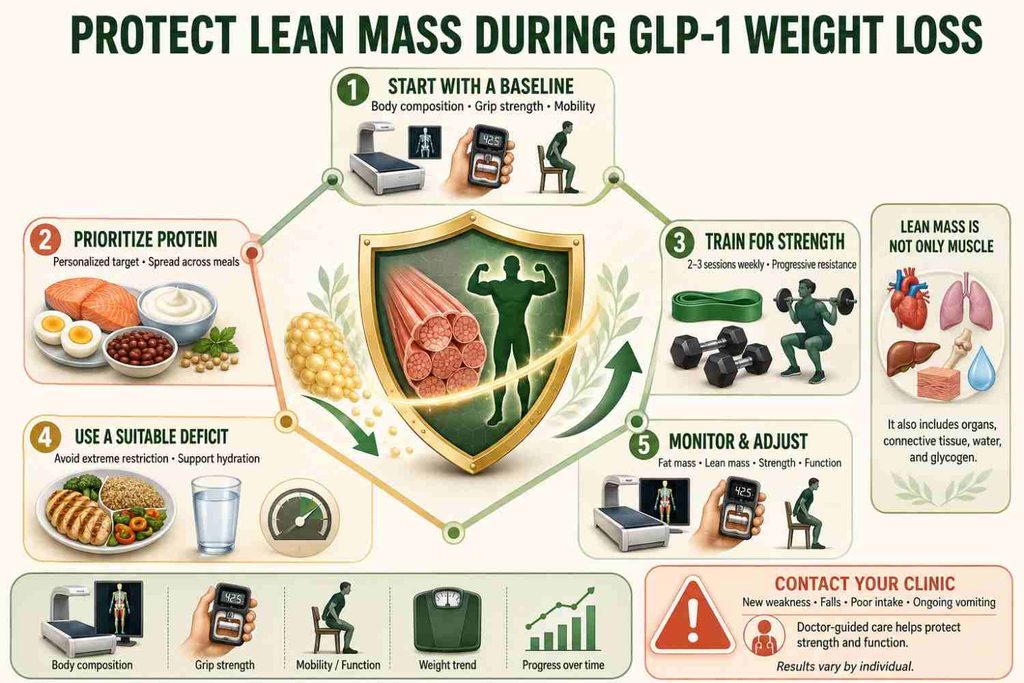
The goal is to improve body composition with maintained strength, mobility, and function. This requires a suitable calorie deficit, enough protein, resistance exercise, and medical follow-up. A doctor may review the dose if adverse effects limit nutrition.
Reinvi MD uses a personalized, doctor-guided model combining GLP-1 treatment with nutrition and metabolic care. The clinic states that results vary. Learn about Reinvi MD’s weight-loss approach.
GLP-1 Muscle Loss – What Happens to Lean Mass?
Some lean-tissue reduction is expected during significant weight loss. The main questions are whether it is disproportionate to fat loss and whether strength or daily function declines.
GLP-1 muscle loss cannot be diagnosed from scale weight alone. Dual-energy X-ray absorptiometry, or DXA, measures lean soft tissue rather than skeletal muscle alone.
Bioelectrical impedance analysis, or BIA, is affected by hydration, meals, exercise, and glycogen. A lower result may partly reflect fluid changes.
Sarcopenia involves low muscle strength, reduced muscle quantity or quality, and impaired performance. A clinician may combine body-composition testing with grip strength, chair stands, walking speed, and questions about daily activities.
What Research Shows About GLP-1 Muscle Loss
Fat-to-lean loss varies by drug, population, calorie intake, activity, and measurement method.
In an exploratory DXA analysis from STEP 1, adults taking semaglutide 2.4 mg had a 15% average reduction in body weight at week 68. Total fat mass fell by 19.3%, visceral fat mass by 27.4%, and lean body mass by 9.7%. Although absolute lean mass declined, lean mass as a proportion of total body weight increased by three percentage points.
The SURMOUNT-1 DXA substudy reported that participants receiving tirzepatide lost 33.9% of fat mass and 10.9% of lean mass over 72 weeks. About 75% of the weight loss was fat mass, and 25% was lean mass. The placebo group had a similar fat-to-lean proportion despite losing less total weight.
These are group averages, not individual predictions, and measured lean tissue is not all contractile muscle. A 2024 review found wide variation across GLP-1 studies and warned against treating lean mass, muscle mass, strength, and function as interchangeable outcomes.
If you want to know whether this treatment is right for your skin, read our guide on HydraFacial for Blackheads.
Baseline Assessment for GLP-1 Muscle Loss Prevention
Protection should begin before the first dose. A baseline assessment helps identify patients who have low muscle reserves or conditions that make adequate eating and exercise harder.
A medical and nutritional review may cover
- Weight history, recent unintentional loss, and repeated weight cycling
- Current calories, protein, meal pattern, and food restrictions
- Exercise history, mobility, falls, fatigue, and functional limits
- Kidney, liver, thyroid, gastrointestinal, or neuromuscular disease
- Menopause, bariatric surgery, malabsorption, and corticosteroid use
Starting measurements may include weight, BMI, waist circumference, fat mass, and fat-free mass. DXA can estimate appendicular lean mass.
A clinician may also record grip strength, chair-stand ability, walking speed, and training capacity. Based on history, testing may include a blood count, metabolic panel, kidney and liver function, thyroid testing, iron, vitamin B12, or vitamin D.
If you want to see realistic RF skin-tightening results for the face, neck, and jawline, read our guide on RF skin tightening before and After.
Monitoring GLP-1 Muscle Loss with Body-Composition Testing
Follow-up should compare more than weight. Track percentage loss, waist change, fat mass, lean mass, energy, protein intake, and physical performance.
- DXA: Estimates fat mass, lean soft tissue, and bone mineral content but not muscle fibers directly.
- BIA: Is accessible, but hydration, food, exercise, and device differences affect results.
- Functional testing: Grip strength, chair stands, walking speed, and training performance show real-world function.
- Clinical review: Food intake, medication tolerance, falls, and fatigue add context.
Use the same device and similar conditions, including time of day, hydration, food, and recent exercise. Testing frequency should reflect risk, symptoms, and weight trajectory. An older adult with rapid loss and low food intake may need an earlier review.
No single scan confirms GLP-1 muscle loss. A meaningful assessment connects the measurement with fat loss, strength, and function.
How Weight-Loss Rate Affects GLP-1 Muscle Loss
A large calorie deficit can make protein intake and training difficult. Appetite suppression may cause skipped meals. Nausea, vomiting, diarrhea, or early fullness can reduce intake further. Low energy may reduce the mechanical stimulus needed to maintain muscle.
GLP-1 muscle loss becomes more concerning when a fast decline on the scale occurs with weakness, dehydration, poor intake, or reduced exercise performance.
Clinicians should track percentage change from baseline across several weeks instead of reacting to one weigh-in. Research comparing gradual and rapid weight loss found no clear difference in fat-free-mass change, although gradual loss produced better results for fat mass and resting metabolic rate. This supports looking beyond speed alone.
Individualized Protein Intake for GLP-1 Muscle Loss Prevention
Protein supplies amino acids for muscle protein synthesis. One target does not fit everyone’s goals. Age, target weight, activity, baseline muscle mass, calories, and kidney or liver function affect the prescription.
Many adults losing weight may benefit from an individualized range of near 1.2 to 1.6 grams per kilogram per day. In obesity care, clinicians may use ideal, adjusted, or target weight rather than current weight.
Kidney disease or another restriction changes the target. A 2025 joint advisory supports personalized nutrition, adequate protein, and strength training during GLP-1 treatment.
Practical strategies include
- Divide protein across two or three meals rather than saving most of it for dinner.
- Eat the protein portion first when early fullness limits meal size.
- Choose eggs, fish, poultry, Greek yogurt, cottage cheese, tofu, beans, or lentils.
- Use a suitable protein drink when solid food is temporarily difficult to tolerate.
- Combine plant proteins across the day for a balanced amino acid profile.
- Pair protein intake with resistance exercise because protein alone cannot replace muscle loading.
Higher protein intake can provide a modest additional benefit for lean mass during resistance training, but the response varies with age and training status.
Resistance Training to Limit GLP-1 Muscle Loss
Resistance exercise signals the body to retain and use skeletal muscle during an energy deficit. Walking improves cardiovascular health, mobility, and glucose regulation, but it may not provide enough progressive loading to preserve strength by itself.
A personalized program may use
- Two or three strength sessions each week
- Movements for the legs, hips, back, chest, shoulders, and arms
- Body-weight exercises, bands, machines, or free weights
- Gradual increases in weight, repetitions, or training volume
- Balance work for older adults or people with fall risk
- Modified movements for arthritis, neuropathy, poor balance, or cardiovascular disease
Beginners need safe, repeatable training that gradually becomes harder. Recovery, hydration, sleep, and dietary energy also affect training. In a randomized weight-loss trial, resistance training helped preserve lean mass while reducing body fat.
Warning Signs of Excessive Lean-Mass Loss
Normal weight reduction should not cause a steady collapse in function. Contact the prescribing clinician if any of the following develops:
- New muscle weakness or a clear decline in grip strength
- Trouble rising from a chair or climbing stairs
- Slower walking, poor balance, or repeated falls
- Major reduction in workout performance
- Persistent fatigue or difficulty completing daily tasks
- Inability to eat enough food or protein
- Ongoing vomiting, diarrhea, dizziness, or dehydration
- Rapid weight reduction accompanied by poor function
These findings do not always prove GLP-1 muscle loss. Anemia, electrolyte imbalance, thyroid disease, low blood pressure, dehydration, infection, and medicines can cause similar symptoms. Medical assessment can identify the cause.
Dose Review When GLP-1 Muscle Loss Is a Concern
Patients should not stop treatment or change a dose without the prescriber. The clinician may review the current medication, titration schedule, weight trajectory, gastrointestinal effects, hydration, calorie and protein intake, body composition, glucose response, and physical function.
Depending on the findings, the plan may involve treating nausea, increasing nutrition support, maintaining a tolerated dose, delaying the next increase, reducing the dose when appropriate, or reconsidering treatment. Muscle loss is not a stand-alone dosing rule.
The current Wegovy label allows dose escalation to be delayed for four weeks when a patient does not tolerate a dose.
Higher-Risk Patients and GLP-1 Muscle Loss
Some patients have less physiological reserve and need closer monitoring. This includes older adults, people with baseline sarcopenia or frailty, postmenopausal women, sedentary patients, and people with repeated weight cycling.
Risk may also be higher with chronic kidney or liver disease, inflammatory bowel disease, cancer, malabsorption, neuromuscular disease, prolonged bed rest, corticosteroid treatment, or severe gastrointestinal adverse effects.
A 2025 clinical review reported limited body-composition evidence in several high-risk groups and recommended individualized protein intake, resistance training, and closer follow-up.
For these patients, safeguards may include earlier body-composition testing, more frequent nutrition review, supervised strength and balance training, screening for suspected nutrient deficiencies, and physical therapy when mobility declines.
Physician-Guided Care at Reinvi MD
Medication is one part of obesity care. A physician-guided plan connects medical history, nutrition, resistance exercise, side-effect management, and follow-up measurements.
At Reinvi MD, the published weight-loss approach combines GLP-1 medication with personalized nutrition, metabolic testing, hormone assessment when appropriate, and physician oversight. Explore Reinvi MD’s personalized program.
For patients concerned about GLP-1 muscle loss, the discussion can include baseline body composition when appropriate, a realistic rate of loss, an individualized protein target, exercise capacity, and dose tolerance.
Results depend on health status, medication response, diet, activity, and adherence, so no plan can promise complete muscle preservation.
Conclusion – Protecting Your Body From GLP-1 Muscle Loss
GLP-1 muscle loss cannot be judged by the scale or one body-composition result. Some absolute lean-mass reduction often occurs when a person loses a substantial amount of weight, but fat should account for most of the change. Strength, mobility, and physical function remain central markers of healthy progress.
The best protection starts with a baseline assessment and continues through adequate protein, progressive resistance training, a suitable rate of weight loss, and regular clinical review.
Patients who develop weakness, poor intake, rapid loss, or persistent gastrointestinal symptoms should contact their prescriber instead of adjusting medication themselves.
Reinvi MD can create a physician-guided plan designed to reduce body fat while supporting nutrition, strength, and lean tissue throughout treatment.
Elevate Your Wellness: Transformative Health Journeys at Reinvi MD, Houston’s Premier Medical Wellness and Aesthetic Spa
Transform your health and elevate your wellness with Reinvi MD, the premier destination for medical wellness and aesthetics in Houston, Texas. Scheduling an appointment is seamless and convenient through our website, and while same-day appointments may not always be available, we strive to accommodate your schedule within the week.
Financial concerns should never hinder your wellness journey. At Reinvi MD, we offer flexible in-house payment plans and collaborate with Cherry and Patient Fi to provide zero-percent interest financing options. Unlike traditional insurance plans that can restrict your choices, we empower you to make healthy decisions tailored to your unique needs and priorities.
Our services go beyond conventional treatments, offering advanced weight management programs, rejuvenating skin facials and restoration, incontinence treatments, hormone replacement therapy, body sculpting, and contouring.
With compelling patient testimonials and impressive before-and-after results, Reinvi MD is dedicated to delivering comprehensive care that transforms lives. Experience exceptional care and board-certified expertise at Reinvi MD and set a new standard for your health and wellness today.
📍 Reinvi MD – Skin, Body & Wellness Clinic
✅ Skin Rejuvenation • Body Contouring • Physician-Led Aesthetic Care
📌 Address: 17110 House Hahl Rd Ste B-2A, Cypress, TX 77433
📞 Phone: (281) 475-4512
📷 Instagram: instagram.com/reinvimd
Stay inspired with client transformations, behind-the-scenes treatments, and expert skin tips.
📘 Facebook: facebook.com/reinvimd
Join our community, see reviews, get exclusive offers, and book directly through our page.
https://pubmed.ncbi.nlm.nih.gov/40289060
https://www.accessdata.fda.gov/drugsatfda_docs/label/2026/215256s033lbl.pdf
https://pubmed.ncbi.nlm.nih.gov/28871849
https://pubmed.ncbi.nlm.nih.gov/35187864
https://pubmed.ncbi.nlm.nih.gov/40445127
https://pubmed.ncbi.nlm.nih.gov/32576318
https://pubmed.ncbi.nlm.nih.gov/38937282
https://dom-pubs.pericles-prod.literatumonline.com/doi/10.1111/dom.15728
https://pubmed.ncbi.nlm.nih.gov/39996356
https://dom-pubs.pericles-prod.literatumonline.com/doi/10.1111/dom.16275